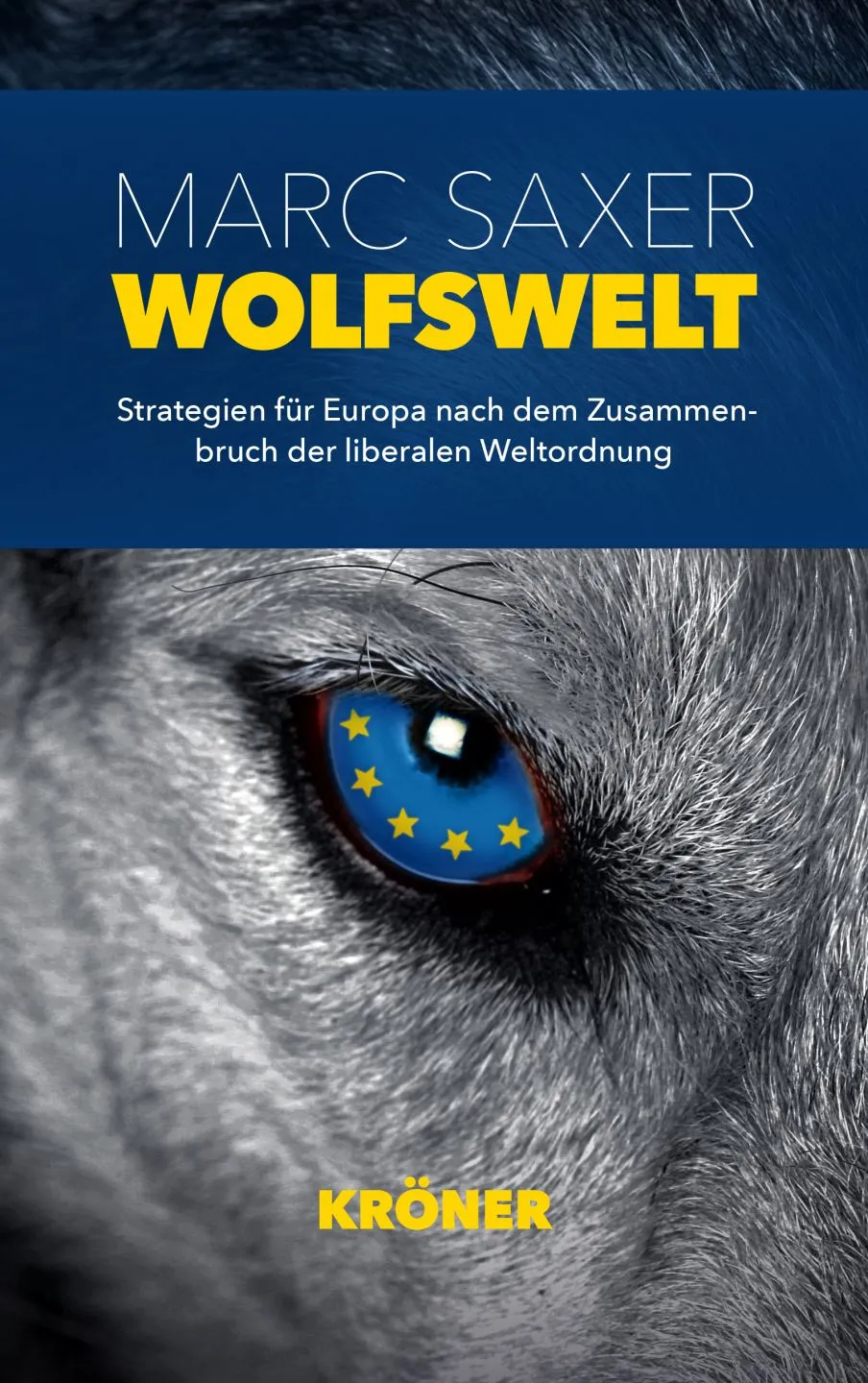
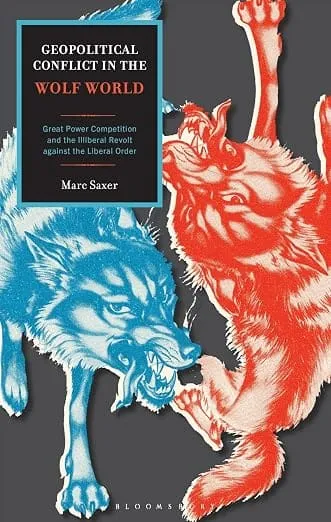
With wars raging in Ukraine and the Middle East, storm clouds gathering over Taiwan, American tariffs hitting friend and foe alike, the bizarrespectreof a Greenland annexation, and a global rush to rearm, the geopolitical landscape is becoming an increasingly treacherous thicket. All the while, the once-bedrock foundations of the liberal international order continue to decay. In his latest book, Geopolitical Conflict in the Wolf World, political strategist Marc Saxer offers a searing diagnosis of these global tremors.
His verdict is stark:this is no passing storm, but the definitive arrival of a brutal, predatory epoch – the‘Wolf World.’In this realm, the law of the jungle takes hold, multilateral bodies fade into irrelevance, and international norms are casually cast aside.Across four chapters, Saxer systematically dissects what he calls the twin crises undermining the liberal order, before offering a blueprint for European survival.
«This is no passing storm, but the definitive arrival of a brutal, predatory epoch – the ‘Wolf World.’ In this realm, the law of the jungle takes hold, multilateral bodies fade into irrelevance, and international norms are casually cast aside.»
He charts the decline of the liberal order as a two-front assault, driven from within and without. Domestically, he argues, the hollow neoliberal promise of the‘end of history’and perpetual economic growth failed to deliver, leaving the liberal consensus ripe for assault by populists on both the right and the left. It is a somewhat woolly premise, however, and one that ultimately bears little connection to the rest of the book.
Saxer is on much stronger ground with his geopolitical audit. Strategic overreach and Western hypocrisy, he contends, have hollowed out the moral core of international law. Rising powers have been quick to step into the breach, carving out new spheres of influence. In this uncompromising reality, geopolitics and geoeconomics have fused into a single, high-stakes game.Whether through proxy wars, critical minerals, semiconductor supply chains, artificial intelligence, or maritime trade routes, every asset is weaponised in an increasingly protectionist, neo-mercantilist world.As for a revival of American hegemony, Saxer rules it out entirely; tomorrow’s world will be dictated by a volatile, asymmetric multipolarity in which Washington can, at best, act asprimus inter pares.
Pragmatism Over Piety
To avert a total breakdown, Saxer calls for a return to diplomacy by proposing a‘Helsinki 2.0.’Drawing on the CSCE process of the 1970s, he advocates cool-headed, pragmatic coalitions forged across deeply divided camps. Flexible, purpose-driven alliances must replace the rigid ideological blocs of the past.
«Whether through proxy wars, critical minerals, semiconductor supply chains, artificial intelligence, or maritime trade routes, every asset is weaponised in an increasingly protectionist, neo-mercantilist world.»
The European Union, meanwhile, faces the Herculean task of reinventing itself. It must evolve into a genuine defence union, compensate for America’s inevitableretreat, manage friction with Russia through hard-nosed realism, and chart an independent, pragmatic course with Beijing.
Despite a few shaky assumptions regarding the internal decay of the West, Marc Saxer has written a bold and intellectually fearless book. His sharp dissection of power, coupled with an unideological reading of the deep historical and philosophical currents shaping China, Russia, India, and the Islamic world, makes this an indispensable compass to contemporary statecraft and security policy.
Marc Saxer: Geopolitical Conflict in the Wolf World. Great Power Competition and the Illiberal Revolt against the Liberal Order. New York/London: Bloomsbury Academic, 2026.