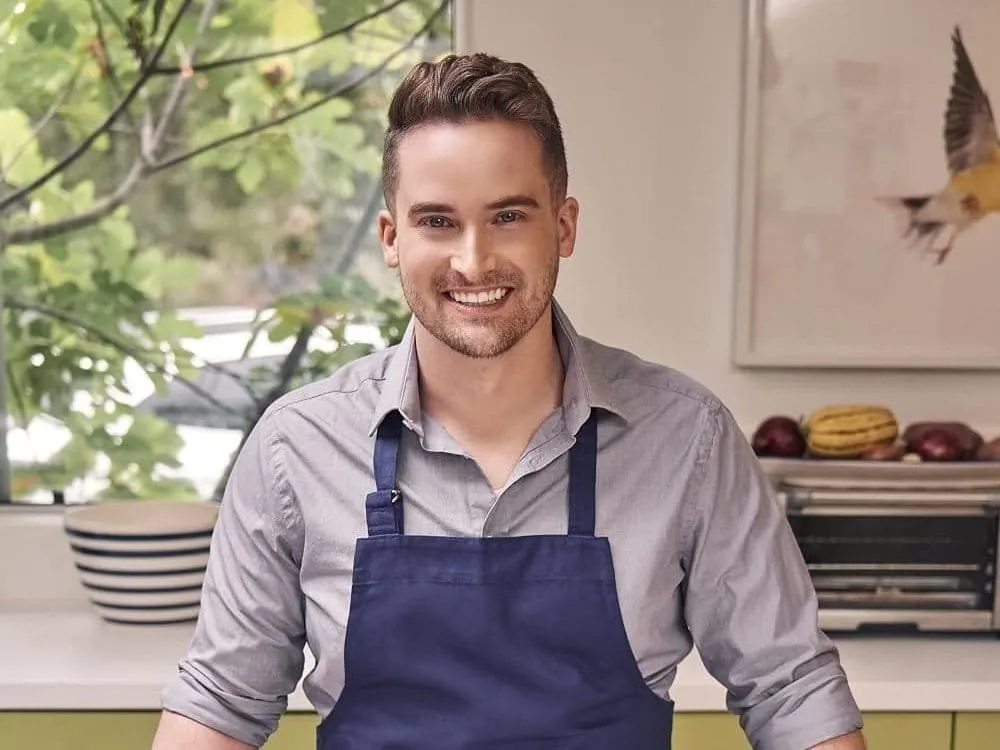
The American Max Miller is a food influencer, bestselling author and the creator of «Tasting History». What began in his kitchen during the pandemic quickly evolved into a global phenomenon: more than 4.5 million people tune in every week to watch Miller recreate historical recipes – from Roman fish sauce to Baroque pastries – while serving up the cultural history behind each dish.
Max, Miller, before we dive into the history books, what did you have for breakfast today, and did it carry any historical significance, or was it purely modern fuel?
Max Miller: It was very modern – just a protein shake, so about as modern as you can get.
If we view recipes as time capsules, what is the single most fascinating detail about the daily lives of our ancestors that you’ve uncovered through old cookbooks?
Max Miller: One of the most fascinating things is the sheer amount of manual labor that went into making food – something we have largely lost in the modern world. Today, we simply buy our ingredients. But historical cookbooks are filled with instructions for making things at home that we now buy ready-made, whether that’s beer, mead, wine, kvas (a Slvic beverage), vinegar, or prepared mustards. For the majority of history, that was everyone’s daily life. Seeing how much time was spent just keeping people fed is truly remarkable.
How does reading a historical recipe differ from analyzing traditional primary sources like political treaties or chronicles? What does the kitchen tell us that politics conceals?
Max Miller: Cookbooks are often much more honest. Most historical documents carry a political slant or a specific agenda. Cookbooks rarely do. They provide an unvarnished look at how people lived, what ingredients were important to them, and what was available. Beyond food, they often contain recipes for ink, soap, and medicines. Of course, there are rare exceptions – like a cookbook associated with Oliver Cromwell’s wife that satirized contemporary politics – but generally, cookbooks offer an authentic glimpse into everyday life.
How do changing ingredients and spices map into broader historical shifts, such as trade, geopolitics, or colonization?
Max Miller: Spices have profoundly shaped European history. After the fall of Rome, the spice trade picked up again in the 11th and 12th centuries, driving commerce with the Middle East and Asia. That demand was a major catalyst for the Age of Discovery as nations sought cheaper, faster routes to pepper, cloves, and cinnamon. Medieval and early Renaissance European recipes were packed with spices – far more than we use today – largely because the wealthy used them to display status. Similarly, sugar helped fuel the transatlantic slave trade. Because sugar grew so exceptionally well in the Caribbean and Brazil, the demand for sugar to send back to Europe drove the proliferation of slavery over a 400-year span.
Historical cookbooks were mostly written for the elite. Looking at sources like Apicius or medieval Europe, some ingredients sound utterly bizarre to modern sensibilities – like flamingo tongues, – yet they were the ultimate luxury of their time.
Max Miller: Apicius is a great example, featuring dishes like the "Shield of Minerva," which included lamprey milt. In medieval Western Europe, feasts featured peacock, dolphin, whale, and elaborate "monster" creations made by sewing parts of different animals together. It shows how culinary display evolved over the centuries.
Food is inherently ephemeral once eaten. Is recreating a historical recipe the closest history has to time travel?
Max Miller: Yes, alongside clothing. When you wear a 16th-century garment, you physically feel how clothes fit differently back then. When you cook a historical recipe, you taste what our ancestors tasted – as closely as modern ingredients and methods allow. Those two things are the most immediate ways to step into the past.
When historical texts hit a wall – due to vague measurements, extinct ingredients, or ancient terminology – how do you handle those gaps to keep your content historically authentic yet engaging?
Max Miller: My conceit since starting the show during COVID has always been trying to recreate dishes in a small modern kitchen with accessible ingredients; the show is really about learning the history. When I encounter unknowns, I look at other recipes in the same text or period for contextual clues. I also look at modern variants – like pretzels – to bridge the gap, even though food continually evolves over time.
Speaking of pretzels, how were they made 500 years ago?
Max Miller: Five hundred years ago, most pretzels weren't treated with the lye solution used in Bavarian pretzels today. There were styles like "wine pretzels," which were hard and biscotti-like. The word "pretzel" simply referred to the shape, not the preparation method. Soft, doughy pretzels didn't become popular until much later, around the 17th and 19th centuries.
What does true culinary pleasure mean to you in an era dominated by ultra-processed convenience?
Max Miller: While convenience has its place, there is deep pleasure in the process of cooking. Food carries ritual, memories, and history. The work involved – like baking chocolate chip cookies from scratch – makes the final product taste better because of the effort behind it. Pleasure isn't just taste; it’s everything connected to the food: who you are eating with and where you are eating.
With millions of subscribers on YouTube, why do you think a society obsessed with speed and hyper-convenience is so eager to watch and replicate tedious historical cooking?
Max Miller: It’s the yin and yang of our modern lives. My show isn't fast-paced; it’s a long, simple lecture. People appreciate that chance to slow down. While they might not cook from scratch every day, doing it occasionally forces them to pause and push back against the tide of fast food.
Do you notice different historical reactions when covering international cuisines?
Max Miller: When I cover cuisines outside Europe and America, like Pancit from the Philippines, the response from that diaspora is overwhelmingly supportive and proud. British food also gets an unfair reputation, but once you understand its history – shaped by wartime rationing or the rapid pace of the Industrial Revolution – you gain a much deeper appreciation for it. People take inherent pride in the food of their culture and childhood. For example, a lot of people do not like black pudding, even though they eat it often. But it's part of the full English breakfast. They're going to eat it and they're going to be proud of it.
If you could attend one single dinner party anywhere in history, whose table would you sit at and what would you eat?
Max Miller: I would love to be present at the Congress of Vienna after the Napoleonic Wars. Diplomats used massive French banquets and gastronomic diplomacy to negotiate peace and shape Europe for the next 90 years. I’d love to experience that conversation – knowing what was coming in 1914 – and enjoy some of Antoine Carême’s historic pastries.
How has immersing yourself in food history changed your personal relationship with everyday cooking?
Max Miller: Ironically, I cook less for myself now because filming a short video takes hours of testing and filming. By the end of it, we rely a lot on Thai and Indian delivery! But it has given me a profound appreciation for the labor our ancestors faced – like spending 20 minutes grinding salsa by hand in a stone molcajete from Mexico instead of using a blender.
What was the longest cooking time for a historical recipe you've tackled?
Max Miller: There are a few answers. Ninja hunger pills took three years to ferment in sake, though that was mostly passive. Garum took several months. Active work-wise, a complex Thai Massaman curry took about 12 to 14 hours of work spread over two days due to prepping spices and slow-cooking.
If our readers were to cook one signature recipe from your book to truly experience Tasting History, which ones should they choose?
Max Miller: Maybe a 1670 English pumpkin pie by Hannah Woolley, where pumpkin slices are fried in egg and mixed with herbs and spices – completely different from the modern custard pie and a great example of how recipes evolve over time.
Max Miller, thank you for the interview!
Pumpion Pie
After a recipe by Hannah Wooley (England, c. 1670)
MAKES ONE 9-INCH PIE
COOK TIME: 1 HOUR 40 MINUTES
Zutaten
1 small sugar or pie pumpkin
2 apples (tart varieties, such as Granny Smith)
3 tablespoons chopped fresh rosemary
3 tablespoons chopped fresh parsley
2 tablespoons chopped fresh thyme
3 large eggs, beaten Lard or vegetable oil, for frying
4 tablespoons (57 g) salted butter, softened
⅓ cup (50 g) dark raisins
⅓ cup (50 g) currants
½ cup (100 g) granulated sugar
¼ cup (60 ml) cream sherry
1 (9-inch) piecrust
- Preheat oven to 425°F/220°C.
- Cut off the top stem of the pumpkin, then cut the pumpkin in half. Remove the peel from each half of the pumpkin and scoop out the seeds. Slice the pumpkin into thin slices, about ⅛ inch thick, then set aside. Peel and core the apples and slice into thin slices about ⅛ inch thick.
- Mix the rosemary, parsley, and thyme with the beaten eggs in a medium bowl. Dip the pumpkin slices into the mixture, to coat. Coat the bottom of a large skillet with ¼ inch oil and set over medium heat. Once the oil is hot, working in batches, place a single layer of pumpkin slices on the bottom and fry until soft, turning once, 5 to 7 minutes. Set the fried pumpkin on a wire rack to drain any excess oil. Discard any bits of egg coating that remain in the pan. Repeat until all of the pumpkin is fried, adding more oil if necessary.
- Transfer the fried pumpkin to a large bowl. Mix in 2 tablespoons of the butter, raisins, currants, sugar, and sherry. Line the bottom of the piecrust with the apple slices, pour the pumpkin mixture over the apples, and smooth the top.
- Bake for 20 minutes, then reduce heat to 375°F/190°C and bake 40 to 50 minutes longer, or until the top of the pie is bubbling. If the crust begins to darken too much, cover with a pie shield or aluminum foil. Once the pie is baked, remove it from the oven and set a on a wire rack. While the pie is still hot, scatter the 2 remaining tablespoons of butter on the top of the pie and allow it to melt into the crust. Cool completely before slicing.
From Max Miller, Tasting History. Explore the Past through 4,000 Years of Recipes (New York: Simon & Schuster 2023).